Cost guide · Emergency
Emergency roof repair in St. George, Utah
As of August 2026, emergency roof tarping in St. George typically costs $175 – $700 ($450 average; $1.00–$2.80/sq ft for after-hours service), and roofers add $200 – $300 above scheduled rates above scheduled rates for after-hours emergency repair calls.
St. George Roof Cost · St. George, UT — prices verified August 10, 2026 and August 31, 2026.
What to do in the first hour
If water is actively coming through your ceiling right now, work through these in order before you worry about anything on this page past the next section:
- Get people and belongings out of the way first. If water is coming through a ceiling or light fixture, treat it as an electrical risk — cut power to the affected circuit if you can do so safely, and move people, electronics, and furniture out from under the leak before anything else.
- Contain the water indoors. Buckets, towels, and a tarp or plastic sheeting over furniture buy time. If a ceiling is visibly bulging with trapped water, a small controlled puncture at the low point (a screwdriver, bucket underneath) can relieve pressure before the ceiling fails on its own, more destructively, and without warning.
- Photograph everything before you touch anything outside. Wide shots and close-ups of ceiling stains, visible roof damage from the ground, and any debris. Note the date and, if a storm caused it, the approximate time — this becomes your record whether or not you end up filing an insurance claim.
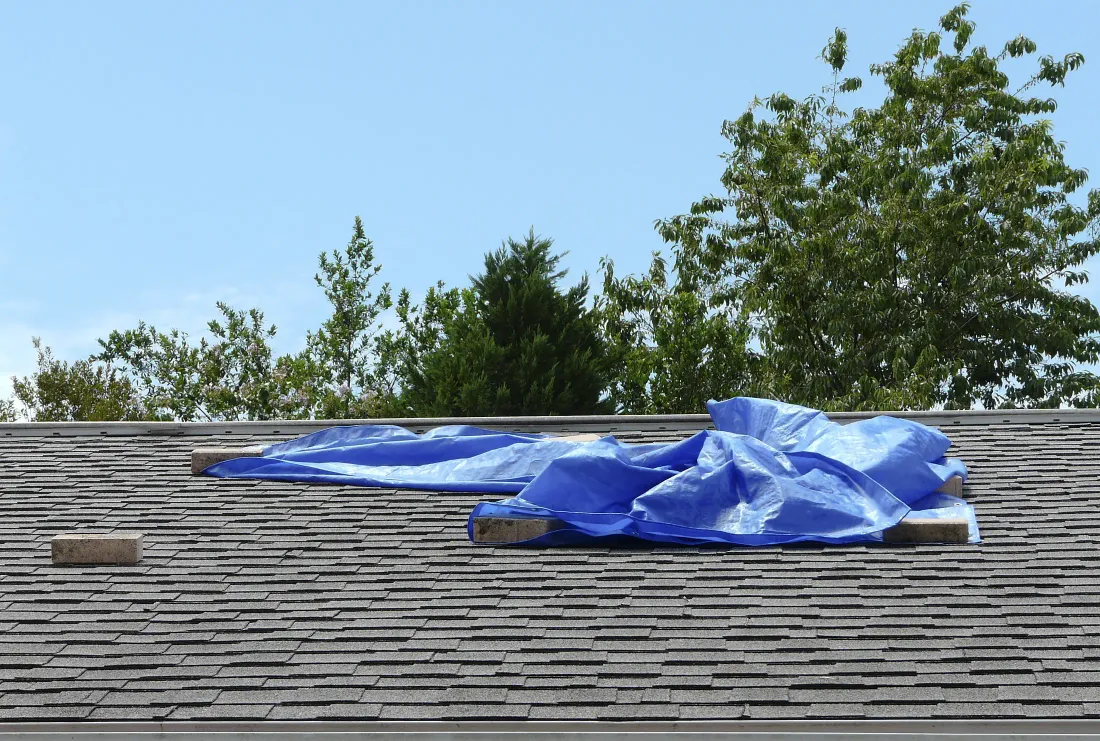
- Call for an emergency tarp, not a full repair, tonight. A same-day or after-hours tarp-over stops active water intrusion and typically runs $175–$700. The full repair can — and usually should — wait for daylight, a proper inspection, and more than one bid, unless the damage is structural.
- Do not get on the roof yourself. Wet, storm-damaged, or tile roofing is significantly more dangerous to walk than a dry, undamaged one, and a fall is a far worse outcome than a few more hours of a contained leak. Leave the roof to a roofer with the right harness and footing for the material and conditions.
Emergency repair cost
Emergency pricing has two separate parts, and it's worth knowing which one you're actually paying for. The tarp itself is priced by the job or the square foot; the full repair, when it happens on an unscheduled after-hours basis, carries its own separate premium on top of normal rates:
| Item | Typical cost |
|---|---|
| Emergency roof tarp (temporary, after-hours) | $175 – $700 |
| Emergency / unscheduled call-out premium | $200 – $300 above scheduled rates |
| Roof leak repair | $360 – $1,550 |
A tarp is a temporary stopgap, not a repair — typical tarps last 60–90 days (heavier-duty options 1–2 years) before the underlying repair still has to happen.
Emergency vs. "can wait until Monday"
Not every roof problem that shows up at an inconvenient time is actually an emergency, and knowing the difference saves the $200 – $300 above scheduled rates after-hours premium when you don't need to pay it:
- Call now: water actively entering the house, exposed decking after a storm, a missing or torn-off section of roofing, a tree limb resting on the roof, or any damage you're worried could get materially worse overnight.
- Schedule normally: a missing shingle or a slipped tile you noticed from the ground with no interior leak, cosmetic cracking, or granule loss in the gutters. Get it looked at soon — see our roof damage signs guide for what each symptom means — but paying an emergency premium rarely changes the outcome.
When it's genuinely close, a professional inspection ($100 – $400) same-week is almost always cheaper than an emergency call-out, and it answers the repair-vs-replace question at the same time.
Tarp now, repair later — and how insurance fits in
If a storm caused the damage, the tarp isn't just a stopgap for your house — it's also part of the claim. Most homeowners policies require reasonable steps to prevent further damage, and an emergency tarp is the textbook example; keep every receipt, since it's typically reimbursed alongside the repair. Our storm and insurance claim guide covers the full documentation and filing process, including Utah's specific protections on insurance-paid roofing work.
Watch for storm-chasers when you're under pressure
Emergencies are exactly when vetting matters most, because they're exactly when people skip it. Someone who showed up unsolicited after a storm — rather than someone you called — deserves more scrutiny, not less, before you sign anything, especially an insurance-assignment document. Verify a Utah DOPL license (roofing is specialty classification S280) before agreeing to anything beyond the emergency tarp itself — our contractor vetting guide has the full checklist and the red flags specific to storm response.
Free quotes
Get an emergency roof repair quote from a local St. George roofer
Tell us what's going on with your roof and we'll connect you with an independent local contractor for a free, no-obligation quote.
Good to know
Frequently asked questions
How much does emergency roof repair cost in St. George?
Emergency roof tarping in St. George typically costs $175–$700, averaging around $450, per HomeGuide data — with after-hours service running $1.00–$2.80 per square foot. Roofers separately add $200–$300 above their normal scheduled rate for an unscheduled emergency call-out on the full repair.
Is a tarp a real repair, or just a stopgap?
A stopgap — a temporary tarp typically lasts 60–90 days, with heavier-duty options lasting 1–2 years, per HomeGuide. The point of a tarp is to stop active water intrusion immediately and buy time to get a proper inspection and more than one repair bid, not to replace the underlying fix.
What actually counts as a roofing emergency?
An active leak, water visibly entering the living space, a missing or torn-off section of roofing, exposed decking after a storm, or a large tree limb resting on the roof all count as emergencies that need same-day attention. A missing shingle with no interior leak, or cosmetic cracking on tile you noticed from the ground, can typically wait for a scheduled daytime appointment at standard rates.
Will insurance reimburse emergency tarping?
Usually, yes — most homeowners policies require the policyholder to take reasonable steps to prevent further damage, and tarping is the standard example. Keep every receipt and photograph the tarp installation itself. Our storm and insurance claim guide walks through the full documentation and filing process.
How do I avoid storm-chaser scams when I need help fast?
The same vetting rules apply under time pressure, if anything more so: verify a Utah DOPL license before signing anything, be wary of anyone who showed up unsolicited after a storm rather than someone you called, and never sign an insurance-assignment document you haven’t read in full. Our contractor vetting guide covers the specific red flags to watch for.