Guide · Materials
The best roofing material for St. George’s desert climate
As of August 2026, the best-value roof for most St. George, Utah homes is architectural asphalt shingle at $11,914 – $16,436 on a 2,000 sq ft home, while concrete tile ($7 – $19/sq ft installed) is the best longevity-per-dollar in this UV — and the right answer changes with your budget, HOA, and how long you’re staying.
St. George Roof Cost · St. George, UT — prices verified August 10, 2026.
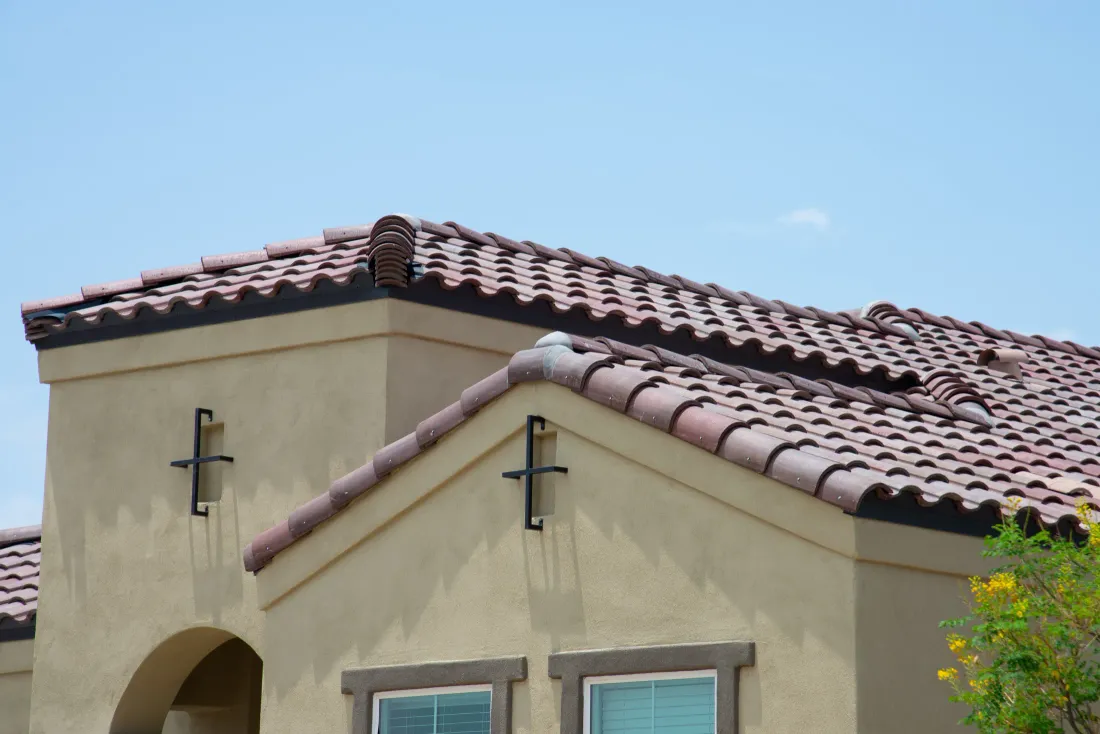
What the desert actually does to a roof
Material comparisons written for the national market miss what matters here, because St. George's climate attacks roofs differently than almost anywhere those articles are written. Four local realities should drive your material choice:
- UV intensity. The desert sun breaks down asphalt binders, foam coatings, and sealants years ahead of national schedules. It's the single biggest reason material lifespans quoted nationally run long for St. George.
- Thermal cycling. Summer roof-deck temperatures can swing more than 60°F in a single day and exceed 150°F at peak. Every material on this page expands and contracts daily — the ones that fail here fail at the joints, fasteners, and sealant lines that cycling works loose.
- Wind, not hail. Recorded storm data for the St. George area shows exactly one hail event in the last two years (half-inch stones, October 2024) against repeated high-wind events — gusts of 61 mph in March 2025 and 55 mph in February 2026. Wind rating matters more than impact rating when you're choosing a material for this county.
- Flat sections. Southwest desert architecture loves a flat or low-slope roof section, and pitched-roof materials can't be used there. Many St. George homes need two systems — one for the pitched area, one for the flat — and two line items on the bid.
If you're not sure whether your current roof is failing or just aging, the roof damage signs guide walks through what each symptom means before you spend anything.
The comparison, side by side
| Material | Installed cost | Expected life | Desert strength | Desert weakness |
|---|---|---|---|---|
| Architectural asphalt shingle | $11,914 – $16,436 (2,000 sq ft home) | 15–30 yrs rated; plan on the short end here | Best value; every crew installs it; decent wind rating | UV eats the binder — the desert’s favorite victim |
| Standard 3-tab asphalt | $8,419 – $11,665 (2,000 sq ft home) | Short end of 15–30 yrs — shortest on this list | Cheapest install | Lightest binder mass and wind rating — weakest desert choice |
| Concrete tile | $7 – $19/sq ft installed | 50+ yrs (underlayment 20–30) | Effectively UV-proof; the local HOA standard | Heavy; breaks under foot traffic; underlayment still ages |
| Clay tile | $8 – $25/sq ft installed | 50+ yrs (underlayment 20–30) | Same UV immunity as concrete, classic Southwest look | Priciest tile; matching discontinued profiles is hard |
| Standing-seam metal | $9 – $16/sq ft installed | 30–80 yrs | Reflects heat; excellent in wind; near-zero maintenance | Roughly double asphalt up front; fewer local installers |
| Corrugated / exposed-fastener metal | $5 – $12/sq ft installed | 30–80 yrs (fasteners sooner) | Metal durability at a lower price | Exposed fasteners loosen with thermal cycling — a maintenance item here |
| Spray foam (SPF) — flat/low-slope | $3.50 – $7.00/sq ft installed | 40–50+ yrs only if recoated | Seamless waterproofing + insulation on flat sections | Mandatory recoat cycle (recoat $1.50 – $4.00/sq ft every 5–15 years) |
Asphalt shingle: the value default, with a catch
Asphalt is the most common roof in newer St. George subdivisions for the same reason it's the most common roof in America: it's the cheapest to install and every crew knows it. The catch is that St. George is close to the worst climate in the country for it. UV cooks the flexible binder out of the shingle, granules wash into the gutters, and the daily expansion-contraction cycle cracks what's left. "20-year shingles" here are often teenagers when they fail.
If asphalt fits your budget, buy architectural, not 3-tab. The upgrade — $11,914 – $16,436 versus $8,419 – $11,665 on a 2,000 sq ft home — buys a heavier shingle with more binder mass and a better wind rating, and both of those are precisely the properties this climate attacks. It's the rare upsell that's genuinely aimed at the local failure modes.
Tile: what the desert can't wear out
Drive through Bloomington, Santa Clara, or Ivins and you're looking at the material the desert can't beat. Concrete and clay tile are effectively UV-proof — the tile itself lasts 50+ years and often outlives its owners. Many HOA communities here require tile, which settles the material question before you start.
The nuance national guides miss: tile roofs fail from underneath. The waterproof layer is the underlayment beneath the tile, and it ages out decades before the tile does. Most "tile roof replacements" in St. George are actually underlayment replacements — lift the tile, replace the membrane, relay the same tile — which costs materially less than new tile. Any tile bid should state whether your existing tile is being reused. The other local reality: tile breaks under foot traffic, so one careless AC tech can create a repair ($500 – $2,500) on a roof that weather never touched.
Metal: pay double, skip the drama
Standing-seam metal costs roughly double asphalt up front at $9 – $16/sq ft installed, and then mostly stops costing anything. It lasts 30–80 years, its concealed-fastener design handles thermal cycling and monsoon wind better than any shingle, and its reflectivity bounces heat that asphalt absorbs — a real difference in a town where cooling dominates the power bill. If you plan to stay in the home 15+ years, price metal against your electric bill as well as against the other bids.
Corrugated and other exposed-fastener metal profiles get you metal's durability for less ($5 – $12/sq ft installed), with one desert-specific trade: thousands of exposed fasteners, each with a gasket the sun ages and each worked loose a little more by every expansion cycle. They're a periodic-maintenance item here, not install-and-forget.
Spray foam: the flat-section specialist
For the flat and low-slope sections on desert-modern homes, spray polyurethane foam (SPF) is the common local answer at $3.50 – $7.00/sq ft installed. It's genuinely good at the job — seamless, self-flashing around penetrations, and insulating, which matters on a surface the summer sun hits all day.
The trap isn't the install; it's the maintenance contract nobody mentions at the sales table. Foam only survives St. George UV under an intact protective coating, and that coating must be renewed (recoat $1.50 – $4.00/sq ft every 5–15 years). Budget the recoat cycle from day one or the "50-year roof" quietly becomes a 15-year one. If your foam section is already chalking or showing exposed foam, the repair cost guide covers what patches and recoats run.
The layer nobody sells you: underlayment
Whatever material you pick, a membrane underneath it is doing the real waterproofing — and in St. George, the underlayment decision quietly matters more than most of the visible-material debate. Attic and deck temperatures here age organic felt fast; synthetic underlayments handle sustained heat better, which is why "synthetic vs. felt" belongs on your bid-reading checklist and not in the fine print. Under tile, the stakes are highest: the tile can be good for another thirty years while a bottom-of-the-line membrane beneath it fails in fifteen, and the reroof that follows is priced like a tile job either way. When you compare bids on any material, make each contractor name the underlayment product in writing — two bids that look identical at the shingle line can be decades apart underneath.
This is also the honest answer to "why is this bid cheaper?" more often than people expect. Materials are only about a fifth of a replacement's total cost — the itemized worked example in our replacement guide shows the full breakdown — so a bid that undercuts the market by thousands usually got there on what you can't see: the membrane, the flashing package, or the tear-off scope.
Second-order choices that matter here
- Color. Lighter and reflective finishes absorb less of the desert sun than dark ones — a modest but free win for both the cooling bill and the shingle's own aging rate. HOAs often constrain the palette, so check before you fall in love with a sample board.
- Weight. Tile is dramatically heavier than asphalt. Moving a roof from asphalt to tile isn't a material swap — it's a structural question that needs an engineering check on the framing before anyone orders pallets. Budget for that conversation if you're switching.
- Wind rating. With gusts on record above 60 mph locally, ask what wind rating the specific product carries and how it will be fastened — the same shingle line often has higher-rated installation options that cost little extra at install time.
- Warranty structure. The manufacturer warrants the material; the contractor warrants the workmanship. Get both in writing, separately — a "50-year shingle" installed badly is a workmanship claim, not a material one, and it's the workmanship warranty that varies wildly between local bids.
How to actually decide
- Check your HOA first. In tile-required communities (common in Bloomington, Entrada, and Sun River), the decision is made for you — the remaining question is reusing tile versus new tile, and underlayment quality.
- Match the roof's shape. Pitched areas can take any material on this page; flat sections effectively mean foam or membrane. Mixed roofs need both, priced separately.
- Divide cost by honest local years. Use the short end of every lifespan range for asphalt and the recoat-included number for foam. As a hypothetical: a $12,000 asphalt roof over 15 desert years costs more per year than a $25,000 tile-with-new-underlayment roof over 30.
- Factor your timeline. Selling within five years favors the cheaper install; staying indefinitely favors tile or metal, where the desert premium actually pays back.
- Get the full picture on price. Material is only part of the bid — tear-off, pitch, permit, and access move the total. The replacement cost guide has the full breakdown, including a real itemized St. George quote.
Whichever way you lean, get at least two itemized local bids for the same material and run every contractor through the vetting checklist — material choice matters less than the crew installing it.
Free quotes
Get material-specific quotes from local St. George roofers
Tell us what's going on with your roof and we'll connect you with an independent local contractor for a free, no-obligation quote.
Good to know
Frequently asked questions
What is the best roofing material for St. George, Utah?
For most St. George homes, architectural asphalt shingle is the best value and concrete tile is the best longevity-per-dollar, as of August 2026. Architectural asphalt runs $11,914–$16,436 on a 2,000 sq ft home and handles wind and UV better than 3-tab for a modest premium; concrete tile costs more up front ($7–$19/sq ft installed) but shrugs off the desert sun for 50+ years.
How long does an asphalt shingle roof last in the desert?
Plan on the short end of the published 15–30 year range — asphalt shingles rated for 20+ years nationally often fail in their teens in St. George. Desert UV breaks down the asphalt binder and daily thermal cycling finishes the job, which is why architectural shingles (heavier, more binder mass) are the smarter asphalt choice here.
Is a metal roof worth it in St. George?
Metal costs roughly double asphalt up front — standing seam runs $9–$16/sq ft installed — but lasts 30–80 years and reflects heat that shingles absorb, which cuts summer cooling load. If you plan to stay in the home long-term, pricing metal against your power bill as well as against other roofs often changes the math in its favor.
Why do so many St. George homes have tile roofs?
Because tile is one of the few materials the Mojave-edge climate can’t wear out — concrete and clay tile handle 50+ years of UV that destroys asphalt in 15. Many HOA communities also require it. The catch: the underlayment beneath the tile fails decades before the tile does, so most "tile roof replacements" here are really underlayment replacements that reuse the original tile.
What kind of roof goes on a flat roof section in St. George?
Spray polyurethane foam (SPF) is the common local answer for flat and low-slope sections, at $3.50–$7.00/sq ft installed. It insulates and waterproofs in one system, but it only survives St. George UV if it’s recoated every 5–15 years at $1.50–$4.00/sq ft — skip the recoat cycle and a 50-year roof becomes a 15-year one.